


Kensington’s royal connection took on particular importance when William III and Mary II acquired the house that became Kensington Palace in 1689. The palace and its gardens helped shape the area’s identity, while later development established the streets and squares beyond them.
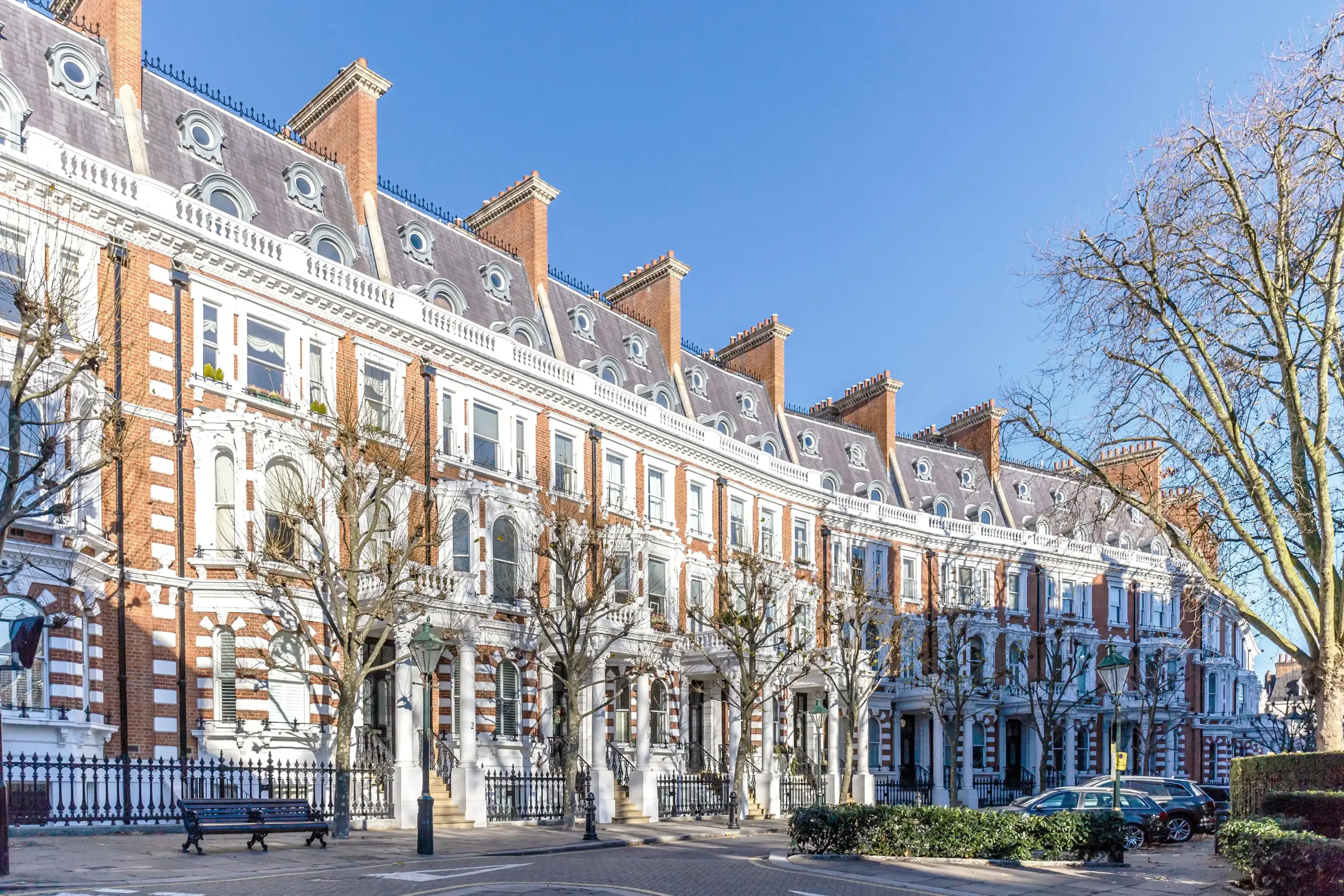
Georgian and Victorian building introduced a range of residential forms, from relatively intimate houses around older streets to large villas and terraces on former estate land. The result is a district whose history is visible in its changes of scale as well as in its major landmarks.
Kensington Palace remains a significant presence, with public visitor areas as well as its continuing royal association. The surrounding gardens provide a setting that residents can enjoy independently of a palace visit.
Kensington Gardens offers broad paths, lawns and avenues, linking the palace with the wider landscape towards Hyde Park. The Albert Memorial stands within Kensington Gardens, opposite the Royal Albert Hall. These landmarks sit within a park that also works as a daily route for walking and outdoor time.
Holland Park has a different character, combining woodland, formal gardens and spaces around the remains of Holland House. The Kyoto Garden is one of its best-known features. Together, the two parks give Kensington a choice of outdoor settings rather than a single green destination.
Looking for something in particular? These searches have been curated to help you find your perfect home.